
Is Bitcoin Physical? A Journey rolling into the Nature of Reality

ShariaQuant Team
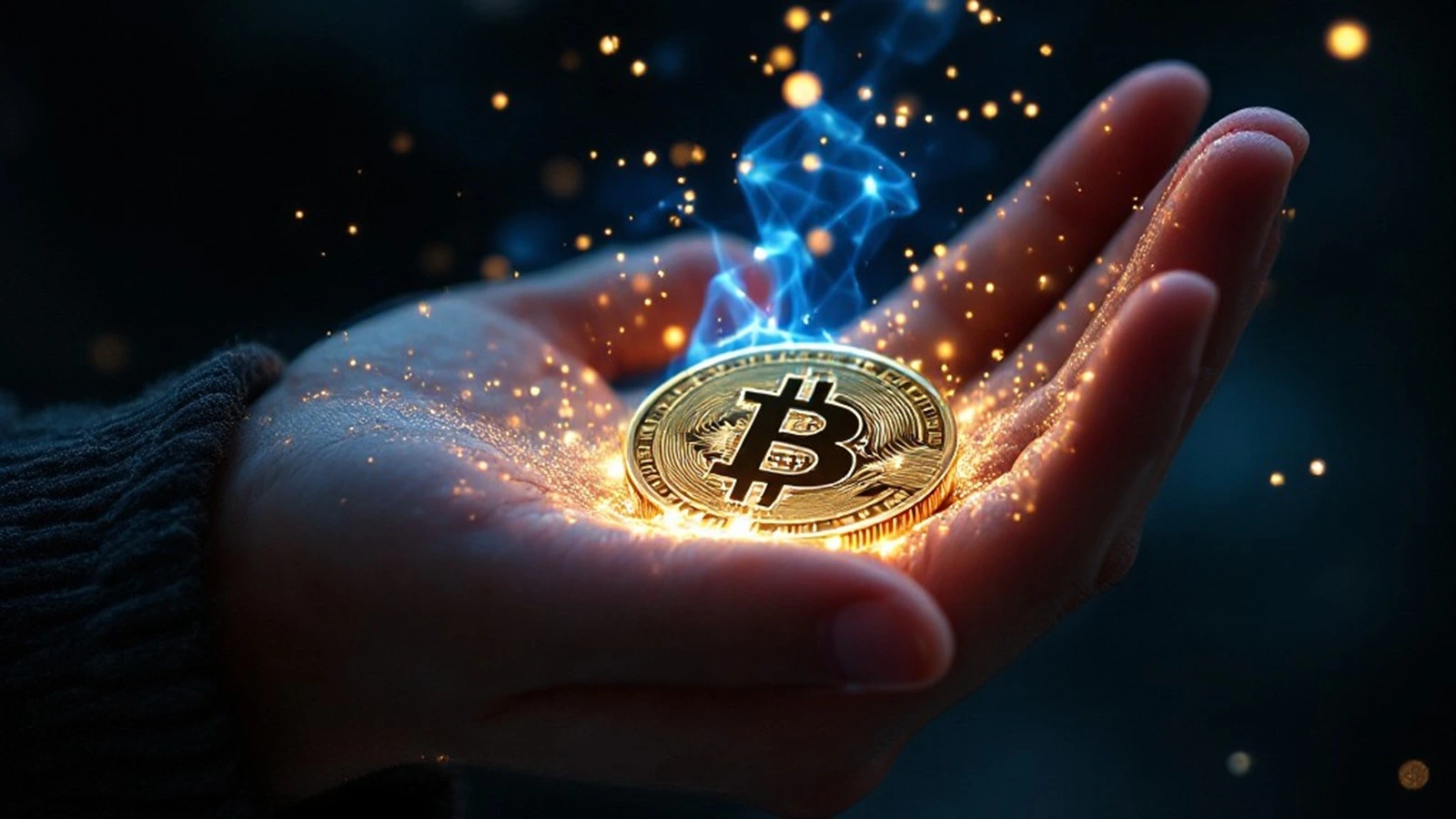
In a world increasingly defined by digital value and virtual identities, the question pops up in every person's mind, especially conventional people! Is Bitcoin physical?
To understand this, we must transition from our traditional understanding of physical assets to a modern, digital-first perspective on store of value and information permanence. Historically, money was something you could hold in your hand—a physical gold coin, a silver dirham, or a paper dollar. It had tangible mass, occupied space, and possessed properties that were perceptible by high-order human senses.
But does the lack of a tangible physical shell mean Bitcoin does not exist in the physical universe?
Free module
Check the reasoning yourself. Twelve free lessons on riba, gharar and maysir as they apply to crypto. No card needed.
The Physics of Digital Scarcity
Bitcoin is not a magical illusion floating in thin air. At its absolute core, it is supported by a massive, highly durable global grid of computing units. Every single transaction, block, and cryptographic signature requires real energy—specifically, the thermodynamic work done by miners using specialized ASIC hardware.
- Thermodynamic Anchor: Bitcoin's security is anchored directly into the laws of thermodynamics. Proof-of-Work converts physical electricity into mathematical certainty.
- The Ledger of Memory: Every transaction is etched indelibly into billions of silicon transistors and hard drives distributed globally.
- Energy Consumption: The heavy computing operations that run the network prove that Bitcoin exists as a highly physical process. It is a mathematical structure printed into the electromagnetic fabric of our planet.
Information as the Ultimate Reality
In quantum physics, many leading scientists argue that Information is more fundamental than matter itself. John Archibald Wheeler coined the phrase "It from bit"—suggesting that every physical object, every particle, and every force of nature derives its existence from binary yes/no questions (bits).
When we hold a traditional paper banknote, its value does not reside in the physical cellulose fibers. Its value resides in the social information printed on it: the trust in the central bank and the collective agreement of the community. Bitcoin strips away the useless material shell (the paper or the plastic) and leaves you with the pure, naked, mathematically secured social trust. It is money operating as pure light and mathematical truth.
Dynamic Shariah Perspectives
Under Shariah law, for something to be classified as Mal (wealth/property), it must possess utility (Manfa'ah) and be capable of being stored or owned (Taqawwum). Contemporary Islamic scholars have analyzed digital assets and determined that:
- Utility: Bitcoin provides massive utility as a secure, borders-free, non-inflationary peer-to-peer medium of exchange.
- Possession (Hiyazah): Possession is achieved through cryptographic private keys, which are mathematically more secure and exclusive than physical custody in a bank vault.
- Physicality Is Not a Condition: Islamic jurisprudence has never required wealth to be tangible. Intellectual property, rights-of-use, and abstract financial ledgers have long been recognized as legitimate form of Mal.
Therefore, Bitcoin is physical in the sense of the electromagnetic energy and silicon infrastructure that preserves it, and it is hyper-real in its mathematical execution of absolute scarcity.